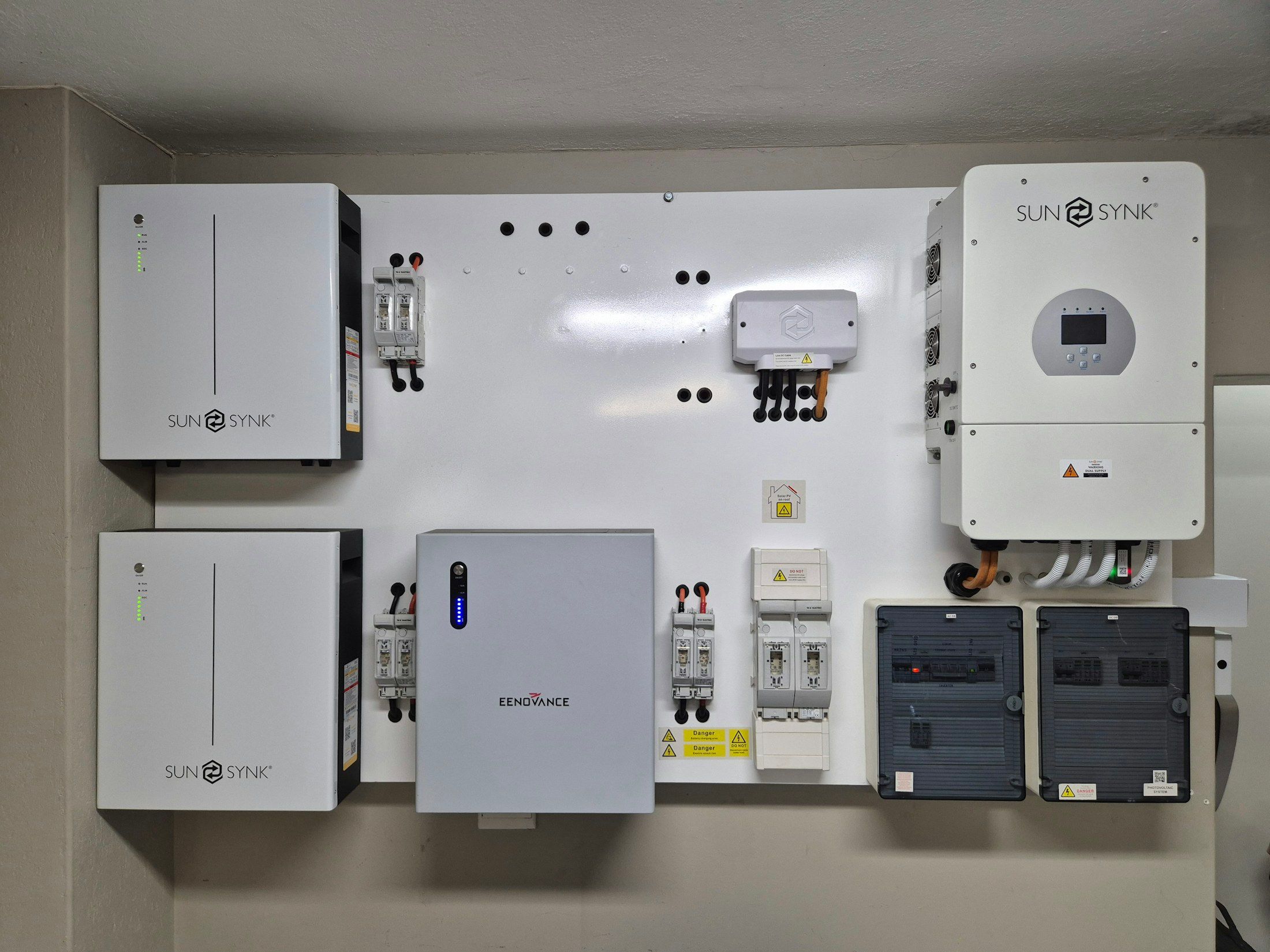
What size home battery do you need?
How to size a home battery from your evening and overnight use, what your solar can refill, and why the rebate taper means bigger is not always better value.
SolarAnswers editors, updated , 6 min read
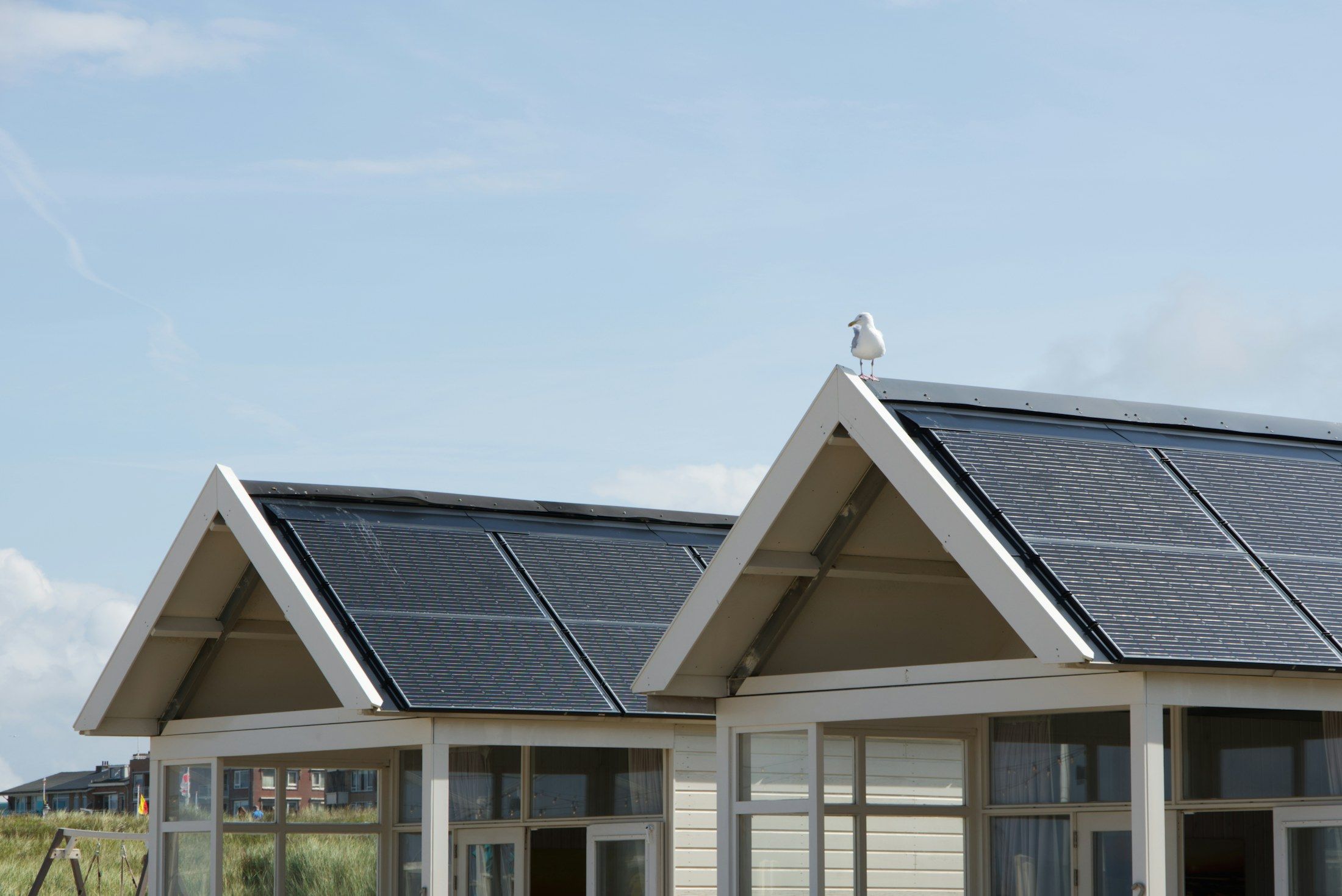
The right battery size is usually the one that covers most of what you use between late afternoon and the next morning, and that your solar panels can refill on a typical day. Start from your own usage data, not a rule of thumb. Bigger is not automatically better, because a battery your panels cannot fill sits partly empty, and the federal discount shrinks per kilowatt-hour as batteries get larger.
Usable versus nominal capacity
Battery capacity is measured in kilowatt-hours (kWh), which is the amount of energy stored. A 1 kW appliance running for one hour uses 1 kWh.
Most spec sheets show two figures:
- Nominal capacity is the total energy the cells can hold.
- Usable capacity is what you can actually draw on. Manufacturers usually hold some back to protect the cells, so it is normally lower.
Always compare batteries by usable capacity, which is also what the federal discount is based on. Two quotes for a "13 kWh battery" can mean different things if one quotes nominal and the other usable.
Usable capacity also fades with age, so ask what capacity the warranty promises by the end of its term.
Start with your evening and overnight use
A battery mostly earns its keep by storing solar energy you would otherwise export and using it when the sun has gone. So the key number is how much you use from the time your solar output drops in the late afternoon until it picks up again the next morning.
Reading it from smart meter data
If you have a smart meter, you can usually download interval data from your retailer's online account or app, or ask your retailer for it. This shows your grid use in short blocks, often every 30 minutes.
To estimate your overnight need:
- Pick a few ordinary days in different seasons.
- Add up the grid use from late afternoon to early morning on each one.
- Look at the typical night, not the worst one.
Your solar is not producing after dark, so what you import overnight is close to what you actually use. Daytime figures understate your real use, because the meter only sees what your solar did not cover.
Seasons matter. Winter evenings with heating and summer nights with air conditioning can look very different from a mild autumn night. A battery sized for your biggest winter night may sit partly unused for much of the year.
Reading it from your bill
Without interval data, your bill can still help. A time-of-use bill splits usage into peak, shoulder and off-peak periods, and the peak period usually includes the evening. A flat-rate bill only shows a total, so divide it by the number of days and treat the result as an upper limit, not an evening figure.
Think about what is changing
Size for the household you will have, not just the one you have now. An electric vehicle, a heat pump hot water system or a growing family can all change your evening use. It works the other way too: running the dishwasher, washing machine or hot water on a timer in the middle of the day uses your solar directly and can reduce the battery you need.
Your solar decides what you can charge
A battery only helps if it gets refilled. In a typical setup, your panels cover your daytime use first, then charge the battery, then export what is left.
The Australian Government's YourHome site lists average yearly solar output by capital city. Sydney, for example, averages about 4.0 kWh per kW of panels per day, Melbourne about 3.6 and Brisbane about 4.2. So a 6.6 kW system in Sydney makes roughly 26 kWh on an average day across the year. Winter and cloudy days produce less.
A useful shortcut is your current exports, shown on your bill or retailer app. That exported energy is roughly what is available to charge a battery, less some losses. If you export only a little in winter, a large battery is unlikely to fill in winter.
If your solar is small or your daytime use is high, you may need more panels before a bigger battery makes sense. See what size solar system you need and how feed-in tariffs affect the value of exporting versus storing.
Some plans offer cheap or free hours in the middle of the day, which may let a battery top up from the grid. Ask your installer to model this with your actual tariff.
Why bigger is not always better value
The federal Cheaper Home Batteries discount tapers as batteries get bigger. With a certificate of electrical compliance issued before the end of 2026 (STC factor 6.8), and before the total is rounded down:
- each usable kWh up to 14 kWh earns 6.8 STCs
- each usable kWh from 14 to 28 kWh earns about 4.1 STCs
- each usable kWh from 28 to 50 kWh earns about 1 STC
- nothing above 50 kWh usable earns certificates
In dollar terms, a 14 kWh usable battery creates 95 STCs, worth about $3,520 to $3,800. Doubling it to 28 kWh creates 152 STCs, worth about $5,620 to $6,080. You get twice the capacity but well under twice the discount. The factor also steps down from 1 January 2027, which our federal battery rebate guide explains.
There is a usage side too. The last few kilowatt-hours of a big battery may only get used on your heaviest nights, so each of those kilowatt-hours does less work than the first few. Try the battery rebate calculator with a few sizes, then weigh the extra discount against the extra price on your quote.
Adding more later
Some batteries are modular, so you can start smaller and add modules later. Check whether the same modules are likely to still be sold in a few years, and check the rebate rules: federal support is one-time per premises. An addition of at least 5 kWh can qualify only if the existing battery never received support. If you claim the discount on a small battery now, a later expansion is unlikely to get any federal help, so it pays to size carefully the first time.
Backup needs change the maths
If you want the battery to run parts of your home in a blackout, that affects sizing in two ways. Keeping a reserve of charge for outages leaves less for everyday savings. And the power rating (kW, how much it can supply at once) matters as much as capacity (kWh, how long it can supply it). See whether a battery works in a blackout.
If you plan to join a virtual power plant, ask what minimum reserve the operator keeps, as that affects how much capacity is really yours day to day.
Single phase or three phase
Many homes have single-phase power. Some, often larger homes or those with big loads such as ducted air conditioning, have three-phase power, which splits the supply across three separate phases.
If you have three-phase power, ask your installer:
- whether the battery and inverter are single-phase or three-phase
- which phases the battery can supply, and what happens to loads on the other phases
- whether backup covers one phase or all three
- whether your network sets export limits that affect the design
Questions to ask your installer
- What is the usable capacity at installation, and what is it expected to be at the end of the warranty?
- How did you work out the size? Did you use my interval data?
- On a typical winter day, will my solar fill this battery?
- What is the continuous power output in kW?
- Can it be expanded later, and would an expansion get any discount?
The short version
- Size a battery from your late afternoon to morning usage, using smart meter data if you can get it.
- Compare batteries by usable capacity, not nominal capacity.
- Check your solar exports: capacity your panels cannot fill adds cost without adding much value.
- The federal discount grows more slowly above 14 kWh and much more slowly above 28 kWh, so bigger is not always better value.
- Backup plans, VPPs and three-phase power all affect the right size, so talk them through before you get quotes.
Sources
- DCCEEW, Cheaper Home Batteries Program
Checked 23 September 2026
- YourHome (Australian Government), Rooftop solar
Checked 23 September 2026
Questions people also ask
Is a 10 kWh battery enough for a family home?
It depends on how much power your household uses after sunset and overnight, not on the number of people. Add up your evening and overnight usage from your smart meter data, then check whether your solar produces enough spare energy to refill that amount on a typical day.
What is the difference between usable and nominal battery capacity?
Nominal capacity is everything the battery cells can hold. Usable capacity is the amount you can actually draw on in everyday use, and it is the figure the federal discount is based on, so compare batteries by usable capacity.
Can I add more battery capacity later?
Some batteries are modular and can be expanded, but check that the extra modules will still be available. Federal support is one-time per premises, so if your first battery received the discount, a later addition is unlikely to qualify.
Does a bigger battery get a bigger rebate?
Yes, up to 50 kWh of usable capacity, but each extra kilowatt-hour earns less once you pass 14 kWh and much less past 28 kWh. The discount grows more slowly than the battery does.