Adding a battery to existing solar: can you keep your inverter?
Many existing solar systems can accept an AC-coupled battery without replacing the solar inverter. The right answer depends on equipment condition, network approval, backup goals and the total installed price.
SolarAnswers editors, updated , 6 min read
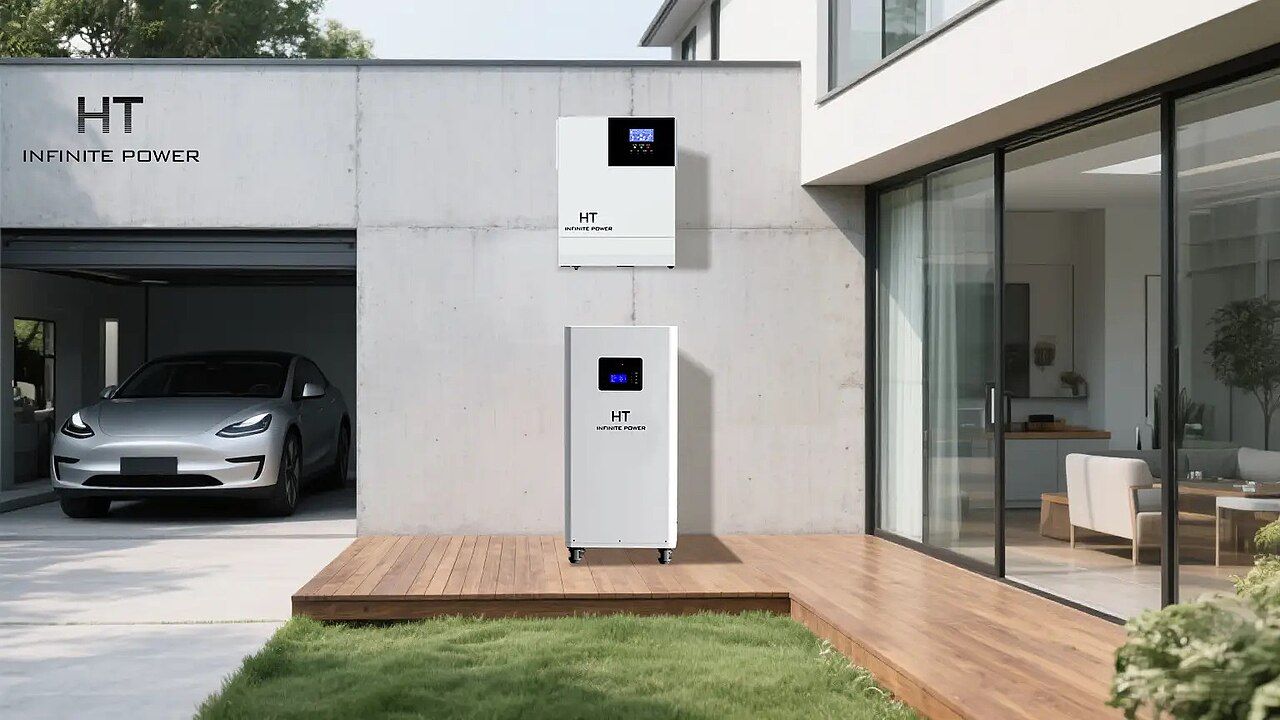
Illustrative inverter and battery equipment, not an Australian retrofit or product endorsement. Image: Yan lance / Wikimedia Commons, CC0 1.0. Cropped and resized for display.
You have panels that still work and want to use more of their output after sunset. A salesperson says the old inverter must go before you can add a battery; another says they can attach one without touching it. Both proposals might be technically possible, but the difference in scope can be expensive. The Australian Government's inverter guide says that an existing solar system can usually keep its solar inverter and add a battery inverter in an AC-coupled arrangement. “Usually” is the important word: the condition and design of your equipment, your connection and your goals still need checking.
Start with your original system documents and recent electricity data. Note the panel capacity in kW, solar inverter make and model, installation date, phase configuration, export limit, annual generation and how much you export on ordinary days. Ask for a site inspection and a written design that explains why each item is being retained or replaced. Our battery sizing guide helps translate your evening consumption into a storage question. A battery's kWh capacity cannot tell you by itself whether the existing panels will charge it regularly.
AC coupling: the common retrofit route
In a conventional solar system, the solar inverter turns the panels' direct-current output into alternating current for the home. With an AC-coupled battery, a separate battery inverter can take AC energy from the home side, convert it to DC to charge the battery, then convert stored energy back to AC when discharged. Some battery products package the battery inverter inside the battery enclosure. The Solar Consumer Guide's explanation describes AC coupling as the usual approach when a battery is added after the solar system was installed.
This can preserve a functioning solar inverter, including a microinverter system, and avoid replacing hardware solely to fit a particular battery architecture. It does not mean every combination is suitable. A designer still needs to check electrical compatibility, metering and control, inverter capacity, switchboard space, phase allocation, network conditions and how the equipment behaves during a grid outage. Ask whether the quote includes any new energy meter or controller, communications connection and commissioning work. A low headline battery price may omit the work that makes it useful in your house.
The alternative often proposed is DC coupling through a hybrid inverter. A hybrid inverter handles both solar and battery conversion in one unit. That may suit a new solar and battery job or a planned solar upgrade. For an existing system, it can require replacing a working inverter and redesigning the panel connections. The government's inverter page notes that hybrid inverters cannot be connected to a system with panel microinverters or to a battery that already has its own integrated inverter. Do not accept a generic claim that one architecture is always more efficient or always cheaper. Request an itemised price and a clear reason for the proposed change.
Check the solar system before sizing storage
An existing array that exports little because the household already consumes most daytime generation may not leave much to store. The Australian Government battery guide says it can make little sense to add a battery to a small solar system that has no excess output. Equally, a large daytime export figure does not prove a large battery will pay back quickly. You need to compare that export with evening imports, retail usage rates, feed-in tariff and any time-of-use or demand charges. Our battery value guide explains the bill arithmetic and why a promised saving should be based on your plan and usage.
Ask the installer to model at least three cases: keep the existing solar and add a battery; replace or expand solar with the battery; and make no hardware change but adjust how you use daytime generation. The comparison should show total installed cost, expected annual charging and discharging, imports and exports, tariff assumptions, warranty position and any required switchboard or network work. A quote that shows only a battery capacity and one simple payback number is not enough to test the decision.
If the existing inverter is old or already near replacement, adding a hybrid inverter may be sensible. If it is healthy and has years of service left, replacing it may add cost and waste. The Solar Consumer Guide's warranty information explains that inverter warranties vary and that inverters may need replacement before panels. Ask whether the retrofit changes any existing manufacturer warranty and who will provide after-sales support for the combined system.
Backup is a separate design choice
A battery does not automatically keep the lights on during an outage. Most grid-connected solar inverters stop exporting when the grid fails for safety. The government battery guide explains that backup needs particular equipment and configuration. In one arrangement, the battery supplies selected loads until it is empty but the solar inverter remains off. In an islandable arrangement, compatible solar may continue generating and charging the battery while disconnected from the grid. These are different outcomes at different prices.
Write down which appliances or circuits you want powered, for how long, and whether you expect solar recharging during a multi-day outage. A single-phase battery at a three-phase property may back up only circuits on one phase unless the design says otherwise. The government's inverter guidance highlights that limit. Ask the designer to mark backup circuits on a diagram and explain the maximum simultaneous power in kW, not just stored energy in kWh. Our blackout guide gives the questions to put in the contract.
Rebates, network settings and the final quote
The federal Cheaper Home Batteries Program can apply to an eligible battery connected to new or existing solar PV. Eligibility is not a reason to assume an old inverter must be replaced. The Clean Energy Council's battery program guidance discusses how previously approved equipment at an existing solar site is treated and distinguishes equipment removed from lists for safety reasons. Have the installer identify the exact battery and inverter products used for the rebate claim, and check the current approved product and accreditation requirements before paying.
The discount is expressed through small-scale technology certificates and depends on usable capacity and installation date, among other conditions. The battery certificate factor is scheduled to step down on 1 January 2027. That date can affect the final discount if an installation slips across year-end, but it does not make an unsuitable design worth buying. Ask the seller to show the eligible usable capacity, certificate calculation and amount deducted on the quote, plus what happens if the installation date changes.
Your distributor may also have connection or export requirements for the combined equipment. A battery that can discharge to the house does not necessarily have unlimited permission to export to the grid. Ask for the network application and approved settings, including any dynamic export or emergency-control obligations in your state. Keep the commissioning records and app access details after installation. They matter if generation or battery behaviour differs from the design; our handover checklist names the documents to request.
For most homeowners, the useful answer is not “replace the inverter” or “never replace it”. It is a written comparison that shows what your existing equipment can do, what the chosen battery adds, and which extra work is actually required. If two installers disagree, ask each to point to the model-specific compatibility issue or network condition behind their recommendation. That makes the decision testable instead of relying on a sales rule of thumb.
Sources
- Australian Government Solar Consumer Guide, Inverters
Checked 22 October 2026
- Australian Government Solar Consumer Guide, Batteries
Checked 22 October 2026
- Australian Government Solar Consumer Guide, Warranties and insurance
Checked 22 October 2026
- DCCEEW, Cheaper Home Batteries Program
Checked 22 October 2026
- Clean Energy Council, Federal and state battery programs and approved products
Checked 22 October 2026
Questions people also ask
Do I have to replace my solar inverter to add a battery?
Usually not. An AC-coupled battery can often be added alongside a working solar inverter, but an installer must check the specific equipment, network approval, switchboard and backup design.
Will my existing solar panels charge a new battery during a blackout?
Not automatically. Solar recharging during an outage needs a compatible islandable design. Ask for a written diagram showing backup circuits and whether the panels continue generating when the grid is down.
Can a battery added to existing solar qualify for the federal discount?
An eligible battery connected to new or existing solar PV can qualify under the Cheaper Home Batteries Program. The battery, installer, usable capacity and installation date must meet current rules.