Is a home battery worth it in 2026?
A battery can make sense if you use power in the evening, get a low feed-in tariff and qualify for the rebate. Here is how to judge it for your own home.
SolarAnswers editors, updated , 7 min read
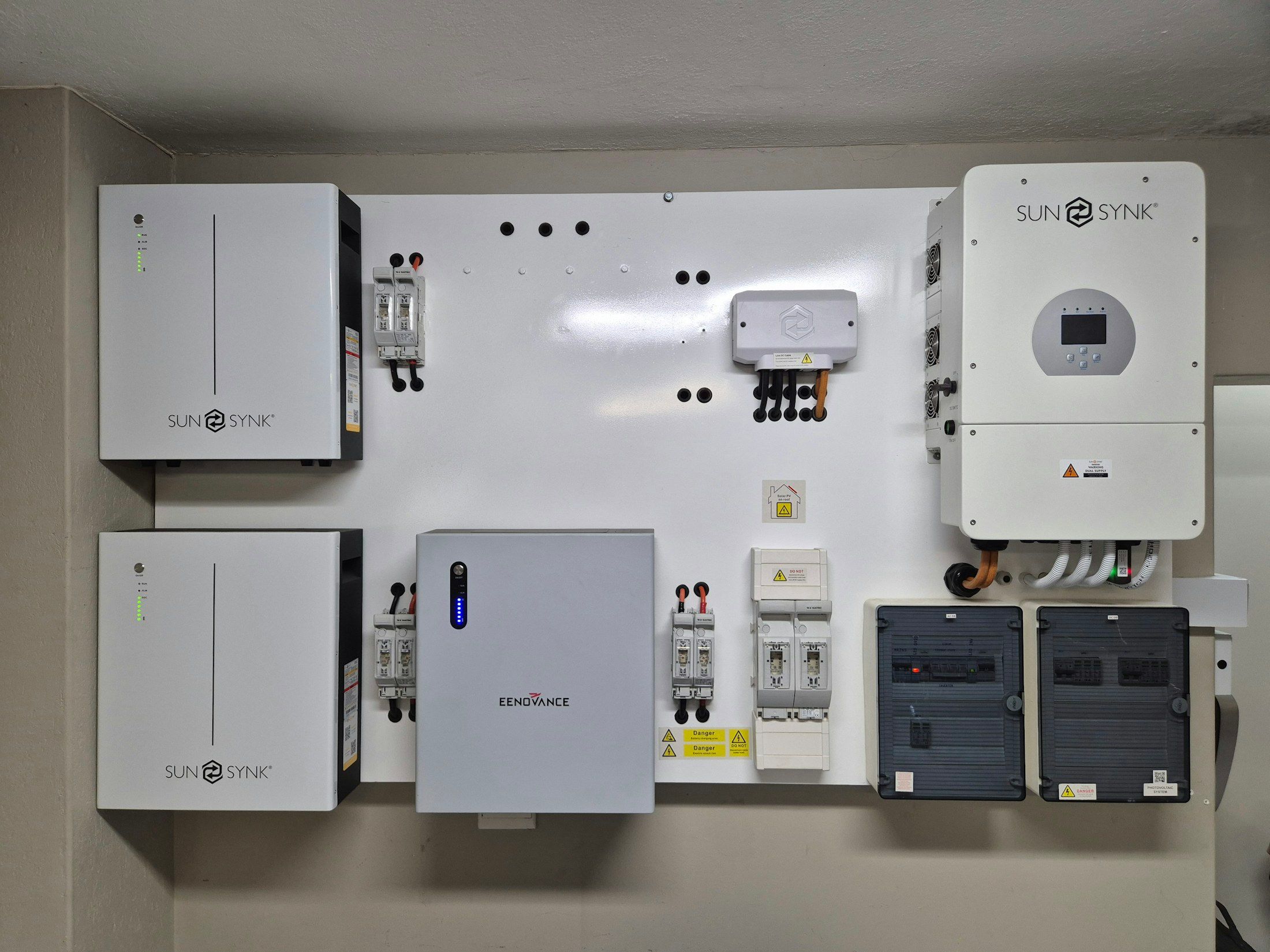
A home battery can be worth it if you use a fair amount of power in the evening, have spare solar during the day, get a low feed-in tariff and can claim a good share of the federal rebate. It's less likely to stack up if you use most of your power while the sun is shining, have little solar to spare, or are being sold a battery much bigger than you need. It depends on your own usage, tariff and quote, so run the numbers for your home.
How a battery saves you money
Without a battery, the solar power you don't use straight away goes to the grid, and your retailer pays you a feed-in tariff for it. A feed-in tariff is the rate, in cents per kWh, you're paid for exported solar. In the evening you then buy power back at the retail rate.
A battery stores some of that spare solar so you can use it later instead of buying from the grid. Each kWh you shift is worth roughly the gap between your retail rate and your feed-in tariff, less some energy lost in storing it.
The gap between feed-in and retail rates
The bigger the gap, the more each stored kWh is worth. The regulated default offers that started on 1 July 2026 give a sense of retail rates in each area: the AER's default market offer (DMO), which is now a maximum price, and Victoria's default offer (VDO). Both include GST. Your own rate may be lower, and time-of-use plans charge different rates at different times of day.
| Area (network) | Default offer flat usage rate | Solar feed-in reference for 2026-27 |
|---|---|---|
| NSW (Ausgrid) | 33.14 c/kWh | IPART benchmark 3.4 to 6.5 c/kWh |
| NSW (Endeavour) | 33.73 c/kWh | IPART benchmark 3.4 to 6.5 c/kWh |
| NSW (Essential) | 35.01 c/kWh | IPART benchmark 3.4 to 6.5 c/kWh |
| South-east Qld (Energex) | 27.97 c/kWh | Check your retailer's rate |
| SA (SAPN) | 41.91 c/kWh | Check your retailer's rate |
| Vic (CitiPower) | 25.96 c/kWh | Retailer sets it, no regulated minimum |
| Vic (AusNet) | 31.98 c/kWh | Retailer sets it, no regulated minimum |
As an illustration, in the Ausgrid area a flat rate of about 33.1 c against a feed-in tariff of 3.4 to 6.5 c is a gap of roughly 27 to 30 cents for every kWh you store and use at night instead of exporting. The IPART benchmark is a guide only, and retailers don't have to follow it, so use the figures on your own bill.
Elsewhere, feed-in rates differ. Tasmania's regulated minimum is 9.276 c/kWh for 2026-27, and regional Queensland's regulated rate is 6.006 c/kWh. In the Perth and south-west grid, the government-owned retailer pays homes 10 c from 3pm to 9pm and 2 c at other times. In the NT, the government-owned retailer pays 9.33 c at any time, or 18.66 c from 3pm to 9pm for homes with a smart meter. Where evening exports pay more, a battery may also earn by exporting then, depending on how it's set up. See solar feed-in tariffs for more.
New tariffs may change the maths too. The default market offer now includes an opt-in Solar Sharer plan with three free midday hours for homes with a smart meter in NSW, south-east Queensland and SA. Ask how any plan you're considering would work with a battery.
How much you use in the evening
A battery only saves money when you use what it stores. Check your usage data from your retailer or smart meter app. If you cook, run heating or cooling, or charge an electric car in the evening or overnight, a battery has more to do. If your home is empty in the evening, less so.
You also need spare solar to fill it. If your panels barely cover your daytime use, a bigger solar system may be a better first step. Our guides on battery size and solar system size can help.
How much the rebate takes off
The federal Cheaper Home Batteries Program gives a discount through small-scale technology certificates (STCs). The number of STCs depends on the battery's usable capacity and a factor that steps down over time: 6.8 for batteries installed from May to December 2026 and 5.7 from 1 January 2027. The rate is set by the date on your certificate of electrical compliance, not when you sign.
The discount also tapers as batteries get bigger. The first 14 kWh of usable capacity earns the full rate, capacity from 14 to 28 kWh earns 60%, and capacity from 28 to 50 kWh earns 15%. Capacity above 50 kWh earns nothing extra.
Two examples at the current factor, valuing STCs at $37 to $40 each:
- 10 kWh usable: 68 STCs, roughly $2,520 to $2,720 off.
- 20 kWh usable: about 119 STCs, roughly $4,400 to $4,760 off.
Twice the capacity brings well under twice the rebate. To qualify, the battery and inverter must be on the Clean Energy Council approved list and an SAA-accredited installer must be on site. Try the battery rebate calculator for your size, and read how the federal battery rebate works for the detail.
Some states add their own incentives, and others have closed theirs. NSW has an incentive for connecting a battery to a virtual power plant, and WA has a battery rebate that requires joining one, plus no-interest loans. Check rebates in your state, including NSW and WA.
Other things that affect the value
Backup in a blackout
Some batteries can keep selected circuits running during an outage, but only if backup is designed into the setup. It's hard to put a dollar value on, but it may matter if outages are common where you live or you rely on powered equipment at home. Read will a battery work in a blackout before you get quotes.
Virtual power plant income, as an extra
A virtual power plant (VPP) lets a retailer or provider use your battery at certain times to support the grid, in return for credits or payments. It can add value, and some state incentives depend on it. But the provider controls part of your battery, and terms can change. Treat any VPP income as a bonus, not the reason to buy. See virtual power plants explained.
Warranty and wear
Batteries slowly lose capacity as they age and cycle. Warranties are often set by a number of years, sometimes with a limit on total energy cycled, and a minimum capacity the battery should keep. Read the warranty document itself, and ask whether joining a VPP or where the battery is mounted affects it.
Who a battery tends to suit
- homes with solar that export a lot during the day and use a lot in the evening
- households on a low feed-in tariff with a big gap to their retail rate
- people who want backup and are willing to pay for it to be set up properly
- homes that can use a state incentive or VPP arrangement that suits them
Who might want to wait
- homes with little spare solar, where more panels may help first
- households that use most of their power during the day
- anyone being offered a battery much bigger than their evening use, since extra capacity earns less rebate and may sit unused
- anyone feeling rushed by a seller (see sales tactics to walk away from)
How to work it out for your home
- Get your usage data from your retailer or smart meter, ideally for a full year.
- Note your retail rate and feed-in tariff from your bill.
- Estimate how much stored solar you'd actually use each evening.
- Check the rebate with the battery rebate calculator and try the solar payback calculator.
- Get written quotes and compare them properly with our guide to comparing quotes, or request quotes.
The short version
- A battery is worth more when your evening use is high and the gap between your retail rate and feed-in tariff is wide.
- The federal rebate is based on usable capacity, tapers above 14 kWh, and steps down from 1 January 2027.
- Backup and VPP income can add value, but check the details before counting on them.
- Size the battery to your evening use, not to the biggest rebate.
- Run your own numbers before you buy.
Sources
- DCCEEW, Cheaper Home Batteries Program
Checked 23 September 2026
- AER, Default market offer 2026-27
Checked 23 September 2026
- Essential Services Commission, Victorian Default Offer
Checked 23 September 2026
- IPART, Solar feed-in tariff benchmarks for 2024-25 to 2026-27
Checked 23 September 2026
Questions people also ask
Do I need solar panels to benefit from a home battery?
Most of the value comes from storing spare solar for use later, so a battery usually makes most sense alongside a solar system with power to spare. Without solar, any benefit depends on your tariff and how the battery is set up to charge.
Is a bigger battery always better value?
No. The federal rebate pays less per kWh above 14 kWh of usable capacity, and a battery you rarely fill or empty adds cost without adding much value. Size it to your evening use and spare solar.
Should I join a virtual power plant to make a battery pay?
Treat it as an optional extra. Some programs pay credits or are required for certain state incentives, but terms vary and can change. Check how the program uses your battery and whether it affects the warranty.
Should I wait for battery prices to fall?
Nobody can reliably predict prices. What is known is that the federal battery factor steps down on set dates, starting 1 January 2027. Weigh that against whether a battery suits your home now.