NSW Home Energy Saver loan: how to apply for solar or a battery
A practical guide to the NSW zero-interest Home Energy Saver loan: who can apply, how to get an eligible quote, and when to wait for the separate discount.
SolarAnswers editors, updated , 5 min read
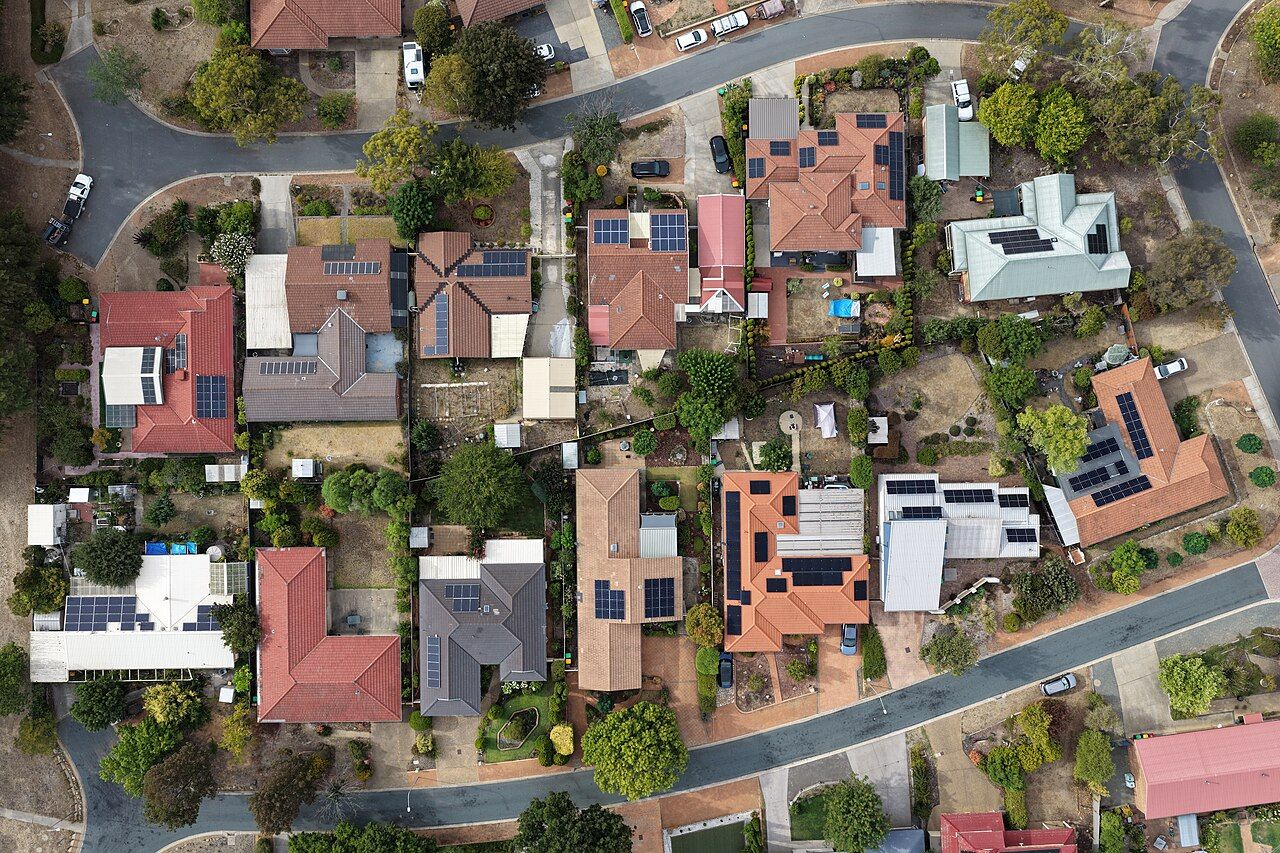
Illustrative rooftop solar photo taken in Canberra, not a NSW Home Energy Saver project. Image: Benlisquare / Wikimedia Commons, CC BY-SA 4.0. Cropped and resized for display.
The NSW Home Energy Saver loan can help spread the upfront cost of rooftop solar, a home battery or another approved energy upgrade. It is a zero-interest loan, not a rebate: you still repay what you borrow. The NSW Government's program page says applications are open for loans of up to $15,000, with repayment terms of up to 10 years. Brighte and Plenti deliver the loans. The separate discount of up to $4,000 was still coming soon when this guide was checked on 19 October 2026.
That timing affects your first move. If you may qualify for both the discount and a loan for the same purchase, NSW recommends waiting for discount applications to open and applying for the discount first. Taking a loan for a battery now does not let you attach the future discount to that same battery purchase later. If you need to proceed now, decide on that trade-off before signing or paying a deposit.
Check the property and household rules first
The October 2026 loan guidelines set out the full eligibility test. In brief, the applicant must own the NSW property, either as a homeowner or landlord, be an Australian citizen or permanent resident, and have combined annual taxable household income of no more than $210,000. The lender also assesses the finance application. Meeting the program rules does not guarantee credit approval.
This loan is not a tenant loan. A renter may be able to seek the separate discount when it opens, with the required landlord permission, but that is a different application. The guidelines exclude social or community housing and short-stay accommodation from the loan. If you own an apartment or an investment property, check the property and approval requirements against the guidelines before ordering equipment. Strata permission and network approval may be separate issues.
The planned discount has a narrower income test: the NSW program page says a household may qualify with income of up to $80,000 or an eligible concession card. That is why it is worth checking the discount rules even if your initial search was for a loan.
Choose the upgrade before choosing the finance
Rooftop solar and home batteries are among the technologies covered by the loan guidelines, alongside other eligible home energy upgrades. Eligibility applies to the equipment, design, installation and supplier, not merely the product category. A battery, for example, needs to meet the program's capacity, connection and product requirements. An ordinary quote from an otherwise reputable installer is not automatically a Home Energy Saver quote.
Start with the job you need. If you already have solar, compare the battery's usable capacity with your evening use, export pattern and desired backup. Our guides on battery sizing and what works during a blackout cover those decisions. If solar is the first step, use solar system sizing to check the proposed array against your roof and electricity use. A loan changes when you pay, not whether the equipment is worth buying.
How to apply, step by step
1. Decide whether to wait for the discount
If your household may qualify for the forthcoming discount and you want it on this purchase, pause here. The NSW Government's application instructions recommend applying for that discount first, then seeking a loan for the eligible balance. As at 19 October 2026, the discount application was not yet open. Do not treat a supplier's estimate of a future discount as an approved amount.
If you do not plan to use that discount on this purchase, you can continue with the loan process now. The government lists no current closing date for loan applications, but that does not mean every supplier or product will stay available.
2. Select Brighte or Plenti, then check the supplier list
NSW lists Brighte and Plenti as participating finance providers. Visit both lender pages. Check their approved suppliers, supported upgrades, loan size and repayment terms before deciding which route suits your project. You apply for the loan through the lender, not through a general NSW grants form.
Brighte describes a $2,000 to $15,000 loan at 0% interest over up to 10 years, with no establishment, weekly account-keeping or introducer fee. Its published terms say a $4.99 late fee may apply, capped at $49.90 a year. Plenti publishes its own loan and fee details, including a possible overdue-payment fee. Read the lender's current contract rather than assuming that "zero interest" means there are no possible charges.
For a practical walkthrough focused on one lender, this NSW Brighte loan application guide shows how an installer quote can fit into the process. The official NSW page and your chosen lender's current terms should settle any differences in dates or eligibility.
3. Ask approved suppliers for itemised quotes
The NSW application page directs households to the approved supplier list of their chosen lender. Ask each supplier to identify the proposed products, installation work and any extra electrical or network work. The loan guidelines require a quote that separates product and installation costs and shows the loan and other discounts. Ask how federal small-scale technology certificate discounts or other eligible incentives have been reflected so that you do not count the same saving twice.
Compare the total installed price, not just the monthly repayment. Check the model numbers, solar or battery capacity, warranties, expected installation date, grid-connection responsibilities and what happens if the design changes. Our solar quote comparison guide has a checklist you can use before signing. If an installer asks for a deposit, confirm its amount and refund terms in writing.
4. Apply with the lender and read the offer
Submit the chosen quote and the documents requested by Brighte or Plenti through that lender's application process. Expect an identity, income and credit assessment. The lender, rather than the installer, decides whether to approve the loan and on what terms. Do not book work on the assumption that an initial eligibility check is final approval.
Before accepting, check the financed amount, repayment frequency, first repayment date, any deposit, fees for missed repayments and the process if installation is delayed or cancelled. If part of the price is above the approved loan amount, establish exactly when you must pay the difference. Keep a copy of the quote, finance agreement and any changed design. The NSW guidelines explain how approved suppliers and lenders confirm completion and payment.
5. Confirm the finished system before repayments begin
After installation, compare the equipment against the signed quote and have the installer show you the system and monitoring. Collect your safety, commissioning and warranty paperwork using our installation handover checklist. The NSW program page says loan repayments start after the installation is complete and working as intended, in line with your loan agreement. Tell the lender promptly if the job is incomplete or there is a dispute about what was installed. Keep written records of the issue and any response.
The useful order is therefore: check discount timing, check eligibility, choose a lender and approved supplier, compare itemised quotes, apply for finance, then verify the completed job. That keeps the finance decision tied to a real system and a real total price, rather than a monthly figure alone.
Sources
- NSW Government, Home Energy Saver program and application steps
Checked 19 October 2026
- NSW Government, Home Energy Saver loan guidelines, October 2026
Checked 19 October 2026
- Brighte, NSW Home Energy Saver loan terms and eligibility
Checked 19 October 2026
- Plenti, Home Energy Saver loans for NSW households
Checked 19 October 2026
- NSW Brighte loan application guide
Checked 19 October 2026
Questions people also ask
Is the NSW Home Energy Saver loan open now?
Yes. Loan applications are open through Brighte and Plenti. As checked on 19 October 2026, the NSW Government had not set a closing date. The separate Home Energy Saver discount was not yet open.
Can I use the loan for a home battery?
A qualifying home battery can be funded, but the product and installation must meet the program rules. Check the current loan guidelines and your chosen lender's approved supplier list before accepting a quote.
Can I combine the loan with the NSW Home Energy Saver discount?
Potentially, if you meet both sets of criteria. For the same purchase, the NSW Government recommends waiting until discount applications open, applying for the discount first, then seeking a loan for any remaining eligible cost.
Is a zero-interest loan the same as a rebate?
No. A loan must be repaid. Zero interest does not remove the principal, and late-payment fees may apply under a lender's terms. The separate discount reduces an eligible purchase price.