Can Australian renters use balcony solar yet? The rules and the alternatives
Energy ministers are examining how plug-in solar could be used safely. Renters and apartment residents still need to check legal, electrical and building rules.
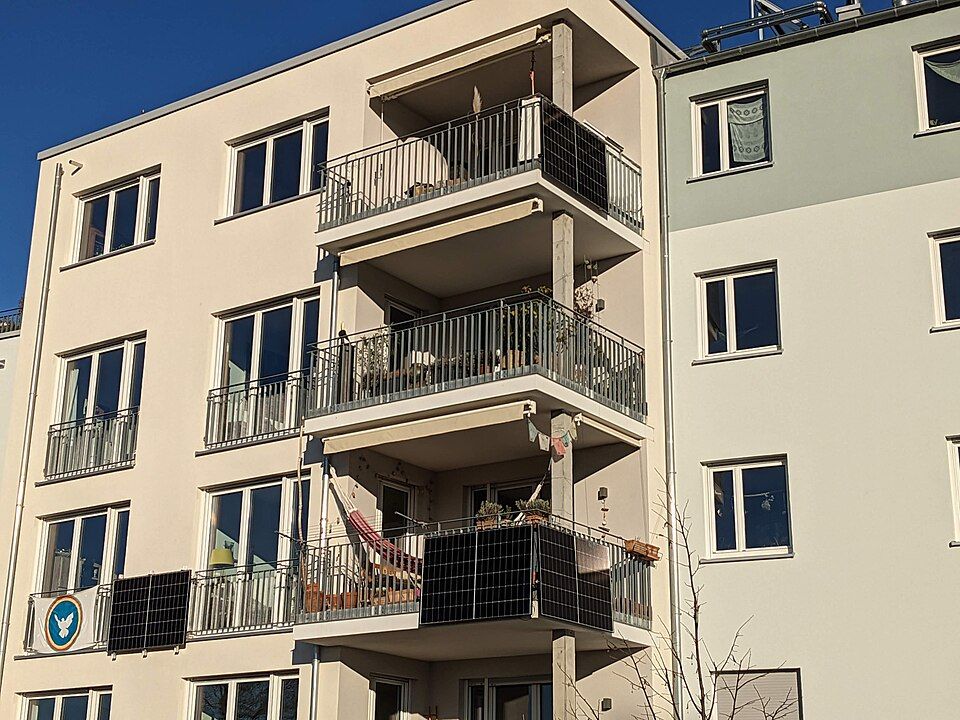
Balcony solar panels photographed in Germany. The image does not show an installation approved for use in Australia. Image reproduced from: Wikimedia Commons, Balkonkraftwerk.jpg. Credit: Rudy23. CC BY-SA 4.0. Resized and cropped for display.
A small panel on a sunny balcony sounds like an answer for households without their own roof. But a product advertised as “plug-in solar” should not be treated as a ready-to-use Australian appliance. As at 18 October 2026, energy ministers have agreed to examine a pathway for its safe deployment. That is a policy process, not a blanket permission for a renter to hang a panel on a railing and plug an inverter into a household socket.
The distinction is particularly important because the hardware is already being discussed and sold. In ABC News' account of the September ministerial meeting, the systems could be sold but not legally plugged in and used under the existing framework. The official Energy and Climate Change Ministerial Council meetings page lists the 11 September 2026 communiqué. Ministers agreed to explore measures for safe use and report on next steps by the end of the year, according to the ABC's report. We found no later national commencement date in the official material checked for this guide.
What makes balcony solar different?
Conventional rooftop solar is designed, installed and connected through a regulated process. A plug-in system is usually a much smaller panel and inverter intended to supply a home through a power point. The attraction is portability and a lower upfront cost, especially for renters. The unanswered Australian questions include electrical protection, product standards, network connection requirements, safe mounting and who is responsible in a strata building. Rules can also differ by state, territory and network area.
An overseas product being available online does not resolve those questions. Nor should a claim that a system is safe in another country be taken as proof that its plug, inverter, wiring arrangement or mounting method complies here. Until a clear Australian pathway is published, do not use an ordinary socket to feed electricity back into household wiring on the strength of marketing alone. Seek advice from your relevant electrical safety regulator and distribution network before buying anything intended for connection.
There is a second set of permissions apart from electrical rules. The Australian Government's Solar Consumer Guide for rentals and multi-occupancy properties says a renter in a house needs the property owner's permission for rooftop solar. A renter in an apartment, townhouse or unit generally needs both the property owner's and body corporate's permission. A balcony fixture may also affect the building facade, structural loading and common property. Get the building's position in writing rather than assuming that a balcony is entirely yours to modify.
The bill calculation is less simple than the sales pitch
The money saved from a small panel depends on how much usable sunlight it receives and how much electricity the household consumes while it generates. A shaded, south-facing or enclosed balcony is not the same as a north-facing rooftop. A panel mounted nearly vertical may have a different output pattern from a tilted roof panel. The tariff also matters: avoiding a kilowatt-hour bought at the retail rate usually has a different value from exporting that kilowatt-hour, if exports are permitted and credited at all.
When a seller presents an annual saving, ask for the assumed panel orientation, shading, local solar resource, installed cost, maintenance and electricity price. Ask whether the model assumes export payments or a subsidy that does not exist. The ABC report includes campaigners' saving estimates, but those are advocacy claims, not a guaranteed Australian household outcome. A renter who moves may be able to take a portable system only if the product, mounting and future building rules allow it.
What renters can pursue now
First, find out whether the building can use conventional rooftop solar. The government guide describes options for common-property electricity, a single unit or multiple units. Shared systems can require additional equipment and an agreed method of allocating generation. Your building may already be assessing one of these approaches. SolarAnswers has explained the separate NSW apartment grant streams, which are worth checking if your building is in NSW; eligibility and deadlines depend on the particular program.
If you rent a detached home, start with a written proposal to the owner. State who would own the rooftop system, pay installation and maintenance costs, receive any export credit, and deal with repairs or the end of the tenancy. The Solar Consumer Guide recommends spelling those arrangements out in the tenancy agreement and seeking independent legal advice. State-based rental solar schemes may help in some circumstances, but they have different conditions and should be checked at the time of application.
You can also look at an electricity plan that rewards moving usage into the middle of the day, whether or not you own solar. The Solar Sharer Offer is an example for eligible households in NSW, South Australia and south-east Queensland, including renters, with a daily free-electricity window and conditions attached. Compare the whole bill, including other rates and the daily charge, before switching. SolarAnswers has a detailed explanation of free midday power.
What to watch next
The useful policy milestone is a published Australian standard and clear state, territory and network rules, followed by information about compliant products and building approvals. Until then, treat balcony solar as a promising proposal rather than an installed benefit you can count on. Ask your landlord or strata committee about conventional rooftop options now, and keep any plug-in purchase decision open until the legal and safety questions are answered.
References checked 18 October 2026
- Energy and Climate Change Ministerial Council, meetings and communiqués, including 11 September 2026.
- ABC News, Romy Stephens, 11 September 2026, updated 12 September 2026, on the plug-in solar proposal and current constraints.
- Australian Government Solar Consumer Guide, solar for rentals and multi-occupancy properties, accessed 18 October 2026.
- Australian Government, Solar Sharer Offer, accessed 18 October 2026.
Written by the SolarAnswers editors
We link the reporting, government, industry or manufacturer sources behind each story below, and distinguish reported claims from our own analysis. We do not sell equipment, and no installer or brand pays to be written about. How we are paid
Sources
- Energy and Climate Change Ministerial Council, meetings and communiques
Checked 18 October 2026
- ABC News, Romy Stephens, 11 September 2026, updated 12 September 2026
Checked 18 October 2026
- Australian Government Solar Consumer Guide, solar for rentals and multi-occupancy properties
Checked 18 October 2026
- Australian Government, Solar Sharer Offer
Checked 18 October 2026
Comments
If comments do not appear, reload this page or browse the community.