Risen targets reflected light with a new anti-glare solar panel
Risen has announced a high-power HJT module designed for sites with glare restrictions. The published specifications are manufacturer claims, rather than SolarAnswers test results.
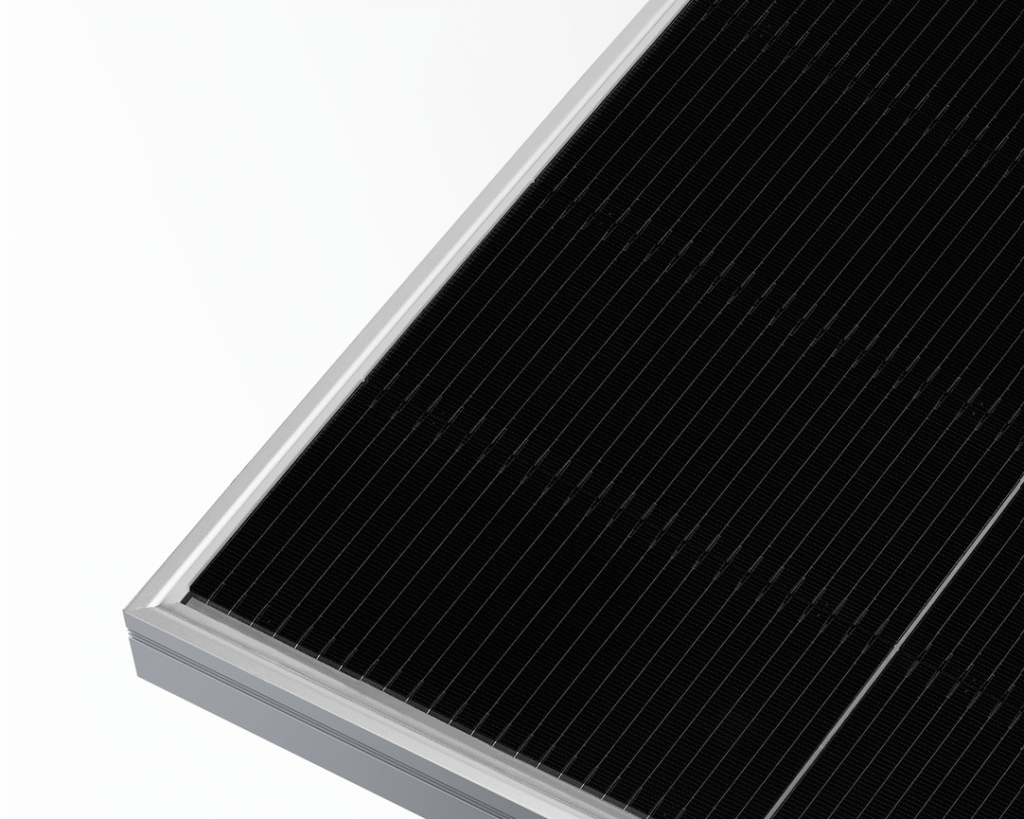
Image reproduced from: pv magazine Australia, Risen releases 23.5%-efficient anti-glare HJT solar module. Credit: Risen Energy, as credited by pv magazine Australia.
Risen's new anti-glare module is aimed at a constraint that ordinary panel comparisons can miss: what happens to light reflected towards neighbouring properties, roads or other sensitive locations. A panel can have attractive electrical specifications and still require careful assessment of its surroundings.
The product announcement, reported by pv magazine Australia on 13 October, concerns an HJT module in Risen's Hyper-ion range. For this expanded article, SolarAnswers checked the manufacturer's anti-glare datasheet as well as the news report.
The specifications that can be checked
Risen's RSM132-8-710-730BHDG anti-glare datasheet lists:
- A power range of 710 W to 730 W.
- Maximum module efficiency of 23.5%.
- N-type heterojunction cells and anti-glare glass.
- A stated 15-year product warranty and 30-year linear power warranty, subject to the applicable warranty document.
- A claimed Class AAA anti-glare certification from TÜV Rheinland.
The sheet is marked preliminary and tells buyers to confirm the certificates applicable in the destination market. These are manufacturer specifications and claims. SolarAnswers has not tested the product or independently authenticated a certificate covering a particular shipment.
What the anti-glare claim describes
pv magazine's report describes an optical approach combining the glass surface with control of internal reflections. The intended applications include sites near airports and residential areas where glare is a design concern.
That is a different question from whether the panel generates electricity efficiently. The efficiency figure describes conversion under specified test conditions; an anti-glare claim concerns reflected light. Neither figure, by itself, tells a planner what a neighbour or road user will see from a particular position.
The appropriate next evidence is the test method, certificate scope and project-specific assessment. A label such as AAA only becomes useful when the designer explains what was measured and why that result meets the relevant requirement.
Why the site still matters
The observer's position, the panel orientation and the path of the sun affect whether a reflection is relevant. A roof layout must therefore be examined in context. A product intended to reduce glare does not remove the need to understand who or what could be affected.
For a residential proposal, ask the designer to identify the concern precisely. Is it a neighbouring window, a road, an aviation requirement or a planning condition? The documentation should explain how the proposed module and layout address that concern.
It should also identify the exact product variant. Using a brochure for an entire panel family is weaker evidence than a datasheet and certificate matching the model in the quote.
Power, efficiency and roof fit are separate comparisons
A higher-wattage panel may reduce the number of modules needed for a given nameplate capacity. It does not necessarily produce the best layout on a roof with hips, vents, setbacks or narrow usable areas. Dimensions, mounting options, handling and inverter compatibility remain relevant.
For that reason, compare complete designs. Ask how many panels actually fit, how the strings are arranged and what annual generation is expected under the same assumptions. Comparing only the largest wattage printed on each datasheet can overlook a better use of the available roof area.
The manufacturer's preliminary sheet also discusses rear-side generation and notes that it depends on the mounting arrangement and reflected light. A bifacial rating should not be treated as a guaranteed extra yield on every roof.
Warranty wording needs its own check
A product warranty and a performance warranty cover different promises. The first concerns the product under its terms; the second specifies an output commitment over time. A long performance period should not be read as a promise that all labour, access, transport or replacement costs are covered for the same period.
Before specifying the module, obtain the current Australian warranty terms, identify the local supplier responsible for a claim and confirm availability. The announcement alone does not establish Australian stock, an installed price or suitability for a specific home.
The useful development is that reflected light is being addressed as a product-design requirement. The useful buying evidence is more exact: a confirmed model, an applicable test record and a site design that demonstrates why the proposed solution fits.
Written by the SolarAnswers editors
We link the reporting, government, industry or manufacturer sources behind each story below, and distinguish reported claims from our own analysis. We do not sell equipment, and no installer or brand pays to be written about. How we are paid
Sources
- pv magazine Australia, Risen releases 23.5%-efficient anti-glare HJT solar module (2026-10-13)
Checked 15 October 2026
- Risen Energy, preliminary RSM132-8-710-730BHDG anti-glare module datasheet, 2026 H2
Checked 15 October 2026
Comments
If comments do not appear, reload this page or browse the community.