Solar Sunshot launches a $250 million round to make solar farms cheaper to build
ARENA is targeting manufacturing and construction technology in its latest Solar Sunshot round. The funding is for industry projects, rather than a new household rebate.
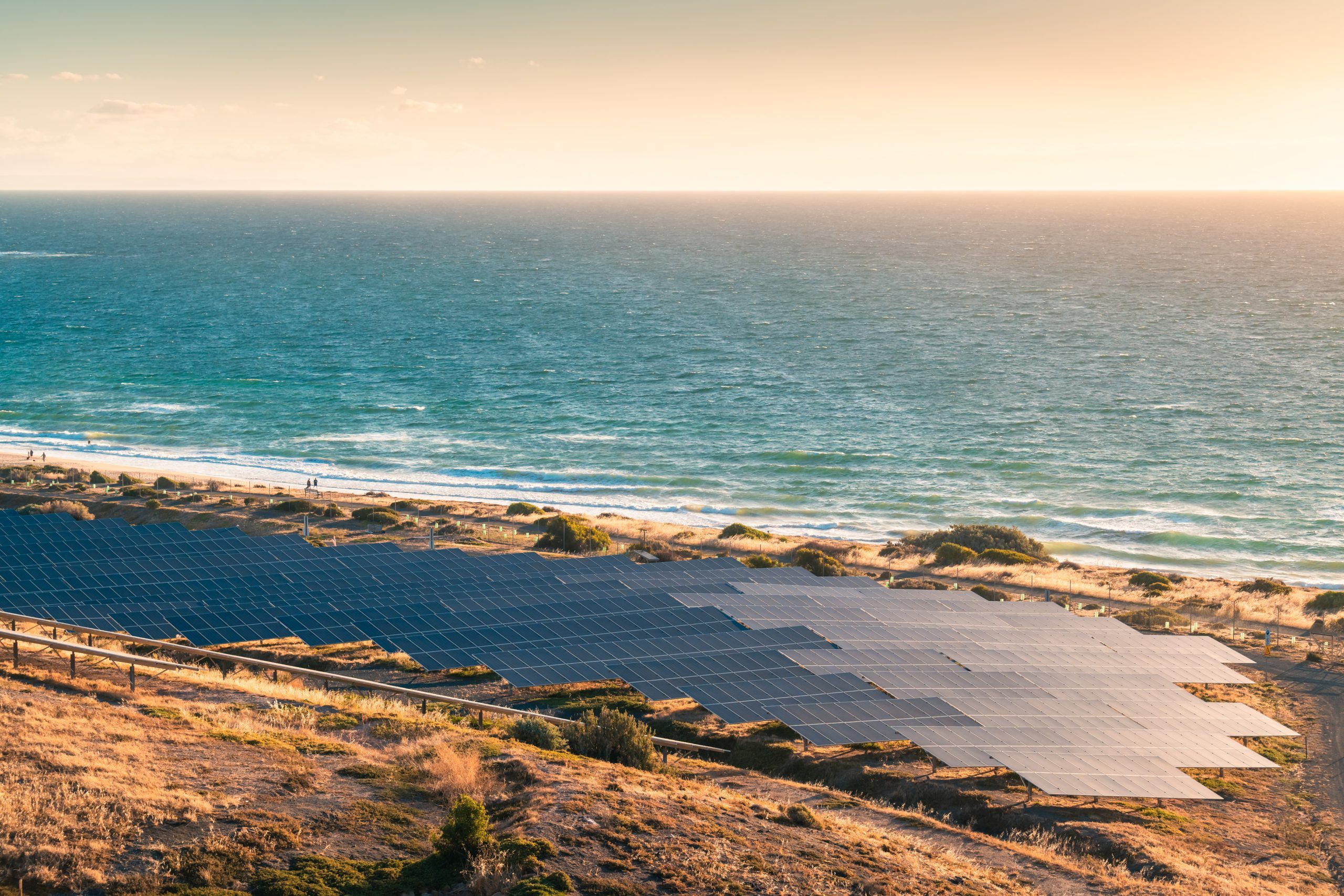
Image reproduced from: ARENA, ARENA seeks local and global solar innovators for $250 million solar manufacturing round. Credit: Image published by ARENA; original asset filename identifies iStock.
ARENA has launched a $250 million Solar Sunshot funding round aimed at the equipment and manufacturing methods used to build large solar farms. The announcement on 15 October shifts attention to the work surrounding the modules: foundations, support structures, tracking, assembly and deployment.
The timing matters for prospective applicants. The round has been announced, but expressions of interest open on 2 November 2026. A launch announcement does not mean that grants have already been awarded or that every company can immediately submit a full application.
Where the funding is aimed
The announcement describes support for commercial-scale manufacture of solar balance-of-plant and deployment technologies. Examples include racking, trackers, robotics, automation and prefabricated systems.
ARENA is seeking projects that establish, expand or demonstrate relevant capability in Australia. Its stated objectives include local supply chains, workforce skills and technologies that reduce the cost and complexity of building solar at scale.
That makes the central question broader than the efficiency of a solar cell. Equipment can contribute by reducing the work needed to get a finished, reliable plant into service, even if the modules themselves are unchanged.
What the application page adds
The Round 3 funding page specifies Australian and international companies incorporated in Australia. It expects technologies to be at least Technology Readiness Level 8 and Commercial Readiness Index 3 when manufacturing begins.
The published process begins with an expression of interest, unless ARENA waives that requirement. Successful applicants are invited to submit a full application. The page describes an open, merit-based assessment and encourages early discussion with ARENA.
An information webinar is scheduled for 26 October. Applicants should use the current funding announcement, guidelines and templates for the operative requirements and deadlines. A general news article cannot establish that a particular business or project is eligible.
Why manufacturing and deployment belong together
A technology may be straightforward to demonstrate but difficult to produce consistently. A construction system may work well once it reaches a site but be expensive to transport or slow to assemble. Funding both manufacturing and deployment addresses the connection between those problems.
For example, a prefabricated assembly could move work into a controlled factory setting. Its value would depend on what happens afterwards: transport volume, handling equipment, installation speed, electrical completion and maintenance access. A reduction in one labour task needs to be weighed against any extra cost elsewhere.
The same reasoning applies to robots and tracking structures. A credible proposal needs to show how the equipment changes the entire delivery process, not simply present a faster operation in isolation.
How to read a $250 million funding envelope
An allocation is the maximum pool identified for the round. It is not evidence that the whole amount has been paid, that every supported project will proceed on its initial schedule, or that one particular cost reduction has already been achieved.
For readers following the program, useful subsequent information would include grant agreements, project funding from other sources, production milestones and deployment results. Those details show how public funding turns into operating capability.
It is also useful to keep manufacturing output separate from installed generating capacity. A factory's annual production capability describes what it could make. Actual solar generation depends on equipment reaching sites, being installed and being connected.
What would make the program successful?
SolarAnswers would look for comparisons that include the complete cost of deployment, construction time, reliability and the ability to repeat the result across different sites. Local training and maintenance capability also matter: a project cannot rely indefinitely on a small demonstration team.
Published lessons can make the benefit extend beyond a single grant recipient. Evidence about what worked, what failed and which site conditions affected performance is more useful to other developers than a headline percentage with no baseline.
The robotics manufacturing awards announced this week provide one example of the type of construction capability being developed. They are separate awards under Round 2, not grants already issued under this new round.
Where households fit
Solar Sunshot Round 3 is an industry program. It does not create a new household rebate or a direct application route for a home battery buyer. Any future effect on electricity costs would depend on technologies being deployed successfully and those gains flowing through the wider market.
For now, the concrete next steps are the information session, the opening of expressions of interest and subsequent project selection. Those are the milestones that will show how this funding round progresses beyond its announcement.
Written by the SolarAnswers editors
We link the reporting, government, industry or manufacturer sources behind each story below, and distinguish reported claims from our own analysis. We do not sell equipment, and no installer or brand pays to be written about. How we are paid
Sources
- ARENA, ARENA seeks local and global solar innovators for $250 million solar manufacturing round (2026-10-15)
Checked 15 October 2026
- ARENA, Solar Sunshot Round 3 funding opportunity and application process
Checked 15 October 2026
Comments
If comments do not appear, reload this page or browse the community.