Four-hour storage beats gas on cost in a new global market comparison
Wood Mackenzie modelling puts four-hour battery storage ahead of gas peakers across 43 markets. The comparison concerns power-system projects, rather than household battery payback.
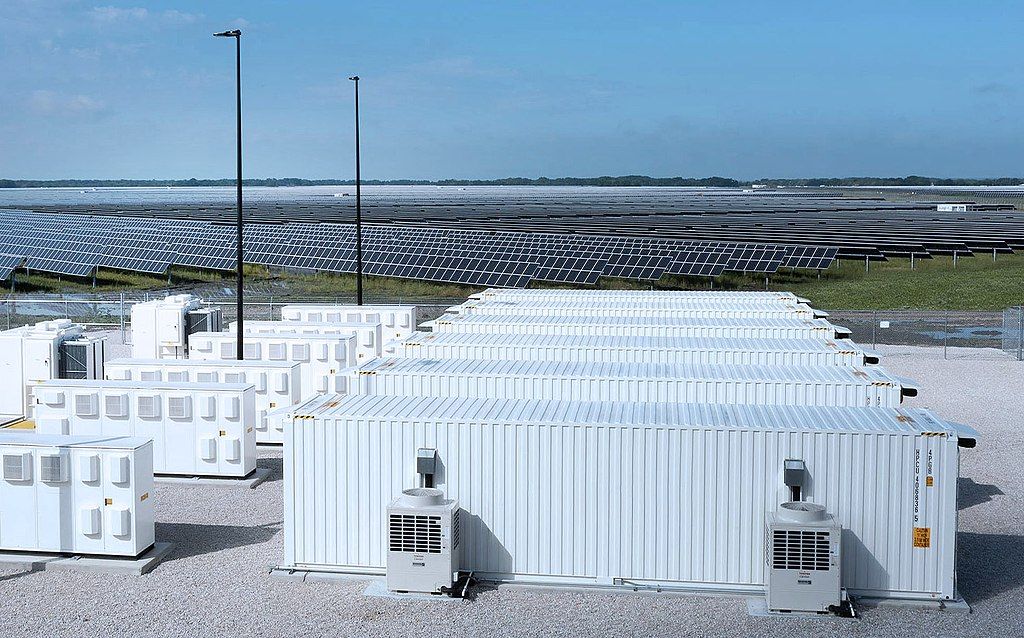
Image reproduced from: pv magazine Australia, Four-hour BESS undercuts gas peakers in 43 global markets. Credit: Digitmed / Wikimedia Commons, as credited by pv magazine Australia.
Four-hour battery storage has moved ahead of gas peaking generation on cost across every market where Wood Mackenzie modelled both technologies. The finding is a substantial signal for electricity investment, but its meaning depends on understanding exactly what was compared.
The study concerns new electricity-system assets. It does not establish that any battery can replace any gas plant, or that a home battery has the same economics as a grid-scale project.
The study and its publication date
Wood Mackenzie's announcement, dated 8 October 2026, says four-hour storage has a lower modelled levelised cost than open-cycle gas turbines in all 43 markets where both were assessed. pv magazine Australia reported the findings on 13 October.
The analyst also found single-axis tracking solar to be the lowest-cost new-build generation option in 43 of 48 markets, with onshore wind leading in the other five. It attributes the changing storage comparison to expanding battery manufacturing, gas turbine supply constraints and fuel-price volatility.
Its regional discussion describes substantial differences in costs between markets. The worldwide result is therefore a set of comparisons under the study's assumptions, not one universal project price. The public announcement does not provide every model input required to reproduce those comparisons independently.
What a four-hour battery can and cannot tell you
A storage system's duration relates its stored energy to its rated power. As a simple illustration, a 100 MW battery with 400 MWh of nominal energy capacity has a four-hour ratio. This example explains the units; it is not a specification for a particular project.
A project still needs an operating strategy. How often will it cycle? What electricity will charge it? How much capacity must remain available for other services? What happens during a prolonged period with limited opportunities to recharge?
These questions affect whether a battery provides the required service at the modelled cost. A comparison aimed at regular evening peaks answers a different question from one aimed at covering an extended supply shortage.
Cost per unit of energy is only part of a system decision
CSIRO's GenCost explainer, updated in July 2026, distinguishes the cost of individual technologies from the cost of a portfolio meeting electricity demand. Its system-level approach considers a combination of generation and storage rather than treating one plant's levelised cost as the final answer for the whole grid.
That provides useful context for reading the Wood Mackenzie result. A low-cost technology still has to be deployed in the right combination, location and quantity. Reliability and the timing of supply cannot be inferred from an average cost alone.
CSIRO and Wood Mackenzie use different studies and frameworks. The GenCost material is explanatory context here, not independent confirmation of the precise 43-market result.
The assumptions worth examining
A serious project comparison should make the following inputs visible:
- Charging and fuel: the price and availability of the energy each asset needs.
- Utilisation: how often the plant operates and how much useful output it delivers.
- Lifetime: degradation, maintenance and any replacement or augmentation costs.
- Finance and construction: capital cost, financing terms and delivery timetable.
- Service requirement: the duration and availability needed when the system calls on it.
Changing an assumption can change the result. For example, a battery with fewer useful cycles spreads its fixed costs across less delivered energy. A gas plant exposed to more expensive fuel faces a different operating cost. Neither effect is captured by comparing equipment purchase prices alone.
Why this is relevant to solar development
Storage offers a way to move some solar output into periods when customers need it. The economic question is whether the value of that shifted energy and other services covers the cost of storing it, including losses and the cost of charging.
The reported cost trend can therefore affect decisions about combining new solar with batteries or adding storage to an existing site. It does not remove the need for a location-specific assessment of connection limits, available energy and expected revenue.
For households, the equivalent exercise is a separate calculation using the installed quote, usage, tariff and operating rules. A global study can explain why storage is attracting investment. It cannot supply the missing inputs for your own payback estimate.
The next useful evidence is the detailed regional assumptions and the performance of projects built under them. That is how a broad cost finding becomes a demonstrable result on an actual electricity system.
Written by the SolarAnswers editors
We link the reporting, government, industry or manufacturer sources behind each story below, and distinguish reported claims from our own analysis. We do not sell equipment, and no installer or brand pays to be written about. How we are paid
Sources
- pv magazine Australia, Four-hour BESS undercuts gas peakers in 43 global markets (2026-10-13)
Checked 15 October 2026
- Wood Mackenzie, Four-hour battery storage now beats gas peaking on cost globally (8 October 2026)
Checked 15 October 2026
- CSIRO, Understanding the cost of Australias electricity transition, updated 15 July 2026
Checked 15 October 2026

Comments
If comments do not appear, reload this page or browse the community.