Battery installation complaints put workmanship and aftercare under scrutiny
ABC's August investigation examined complaints about Solar Power Nation installations, including a cracked battery base. The retailer disputed some concerns and offered further assessment and repairs.
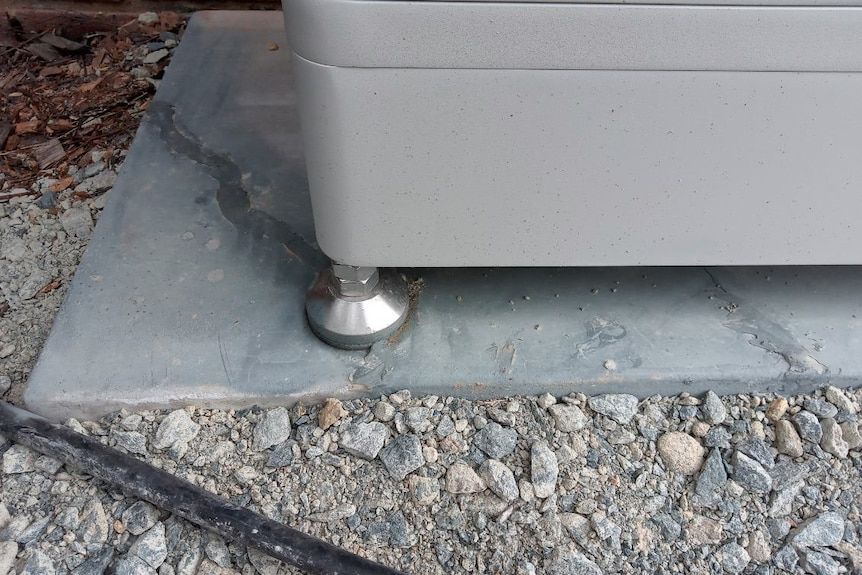
Image reproduced from: ABC News, Multiple investigations into solar power battery provider after hundreds of complaints. Credit: Supplied: Adrian Goodfellow, as credited by ABC News.
Watch the original report

The publisher has restricted playback on other websites. Watch the original report on YouTube.
ABC 7.30: The consumer fallout from the solar battery boom
Watch on YouTube ↗Solar Power Nation's installation complaints raise a practical question for battery buyers: who makes sure a system is properly finished, and who gets it fixed when the customer and seller disagree? Public records show that the concerns extend beyond an unhappy online review to formal action by a consumer regulator and the industry's voluntary code administrator.
This article combines ABC's investigation with those records and government installation guidance. The customer accounts below were reported by Michael Atkin and Lucy Kent for ABC News on 13 August 2026. SolarAnswers has not interviewed the customers or inspected their systems.
A cracked base, a changed design and an unfinished system
Adrian Goodfellow told ABC his 41.94 kWh installation remained switched off almost five months after installation. He alleged that the battery was uneven, its concrete support had cracks covered with silicone, and panels had been placed differently from the agreed design. A review he commissioned raised safety and workmanship concerns.
Solar Power Nation disputed some findings. It said the panel layout changed following an on-site roof assessment and offered necessary warranty work, including slab replacement within 28 days after independent review. Goodfellow said he had not received that offer when interviewed.
ABC also described Amin Khorram's eight-month wait for a missing inverter. It was installed as a tribunal hearing approached; compensation remained disputed. The company said a balance remained unpaid and described the featured complaints as exceptional cases, while offering rectification or refunds where appropriate. Read the investigation and the company's responses.
The photographed defect is a cracked support slab. It does not establish that a battery fell from a wall. That distinction matters when describing the allegation or sharing the image.
What South Australia's regulator put on the record
On 4 August, Consumer and Business Services SA announced a public warning concerning 1 Solar Australia, trading as Solar Power Nation. CBS said it was investigating complaints about faulty or poor installations and deposits paid for products that had not been installed.
The announcement placed the warning within wider enforcement work. CBS had received nearly 130 complaints about the solar sector in the preceding financial year, more than twice the previous year's number. Those are sector-wide figures, not 130 findings against this company. CBS also described action against other businesses and a dedicated Building Industry Response Team.
A public warning signals a regulator's concern. It should not be rewritten as a court judgment establishing every allegation in an individual customer's dispute.
Expulsion from the consumer code is a separate action
The NETCC compliance register lists 1 Solar Australia, trading as Solar Power Nation, as expelled from 15 December 2025. The listed breaches cover contracts and financial disclosure, undocumented consent to a design variation, installation standards, and failure to cooperate with remedial action.
These are findings under the voluntary consumer code. Code membership, an electrician's licence and eligibility to participate in a federal incentive scheme are different checks. A buyer needs to identify the contracting business as well as the person carrying out the electrical work.
Why the mounting and handover deserve attention
The Australian Government's YourHome battery guidance says installation and maintenance require a licensed electrician with the relevant Solar Accreditation Australia accreditation. It discusses both floor-mounted and wall-mounted systems, along with location, temperature, access and maintenance considerations. A battery's capacity is only one part of the design.
For a proposed installation, ask the installer to explain the support arrangement in the site plan. Where will the weight be carried? Does the design require building work? Who is responsible for that work, and is it included in the quote? A salesperson's photograph of a different house cannot answer those questions for your property.
If you notice movement, damaged supports or an uneven installation, ask for a professional assessment. Photographs can help document the concern, but they cannot show whether concealed fixings, wiring or the structure behind them are adequate. Do not attempt to straighten or remount a connected battery yourself.
What the federal inspections check
The Clean Energy Regulator's February safety update introduced additional geotagged and timestamped photographs of critical battery labels from 1 March 2026. These supplement installer-presence photographs. Labels matter because emergency responders and later tradespeople need to identify and isolate the system correctly.
The regulator said installers must return to rectify non-compliant work. Missing required evidence can delay or prevent certificate claims. It also described cooperation with state and territory electrical safety regulators and the possibility of removing installers from the scheme.
An incentive claim, a safety inspection and a completed commercial contract therefore answer different questions. Keep the handover documents, approved design, equipment list and any inspection or rectification records together.
What would demonstrate that a complaint is resolved?
An offer to return is a useful start. Completion needs evidence: a dated scope of repairs, the work actually performed, any required inspection and confirmation that the system can operate as intended. Where a design has changed, the revised drawing should match the installed equipment.
For the customer accounts in this story, we have not established whether the proposed repairs or compensation were subsequently completed. The linked ABC report and regulator records identify the evidence available at the dates stated. The associated ABC 7.30 video remains available through the video link above.
Written by the SolarAnswers editors
We link the reporting, government, industry or manufacturer sources behind each story below, and distinguish reported claims from our own analysis. We do not sell equipment, and no installer or brand pays to be written about. How we are paid
Sources
- ABC News, Michael Atkin and Lucy Kent, Multiple investigations into solar power battery provider after hundreds of complaints (13 August 2026)
Checked 15 October 2026
- ABC News In-depth, The consumer fallout from the solar battery boom, 7.30 (YouTube, 15 August 2026)
Checked 15 October 2026
- Australian Government, YourHome: Batteries, installation and maintenance guidance
Checked 15 October 2026
- Consumer and Business Services SA, Shining a light on dodgy solar operators (4 August 2026)
Checked 15 October 2026
- New Energy Tech Consumer Code, public compliance and expulsion register
Checked 15 October 2026
- Clean Energy Regulator, Safety the priority as solar battery installations surge (February 2026)
Checked 15 October 2026



Comments
If comments do not appear, reload this page or browse the community.