NSW battery owners' $2.12m afternoon: what to check before chasing price spikes
Amber reports $2.12 million in export earnings during a short NSW price spike. Here is what the event means for your battery, electricity plan and expectations.

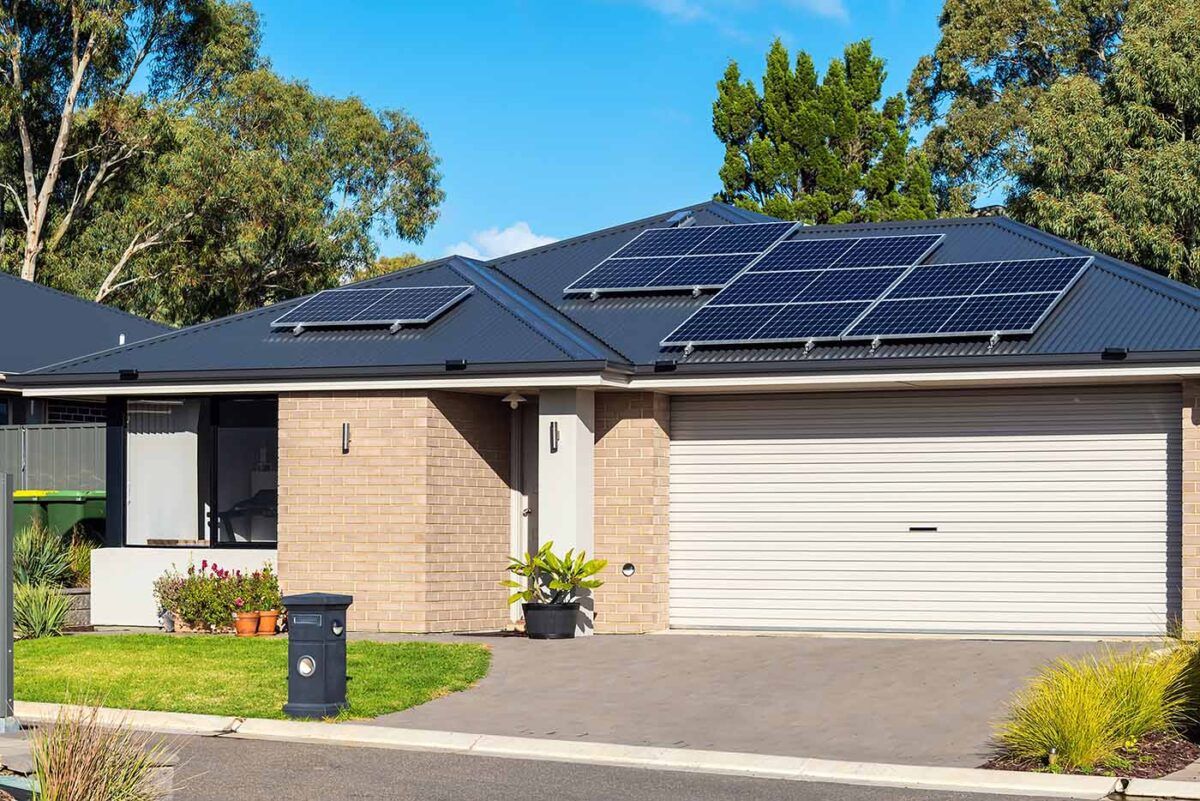
The residential aerial image selected by Amber for sharing its NSW electricity price spike article. Illustrative image: Amber, NSW electricity prices hit $23/kWh. Amber battery customers earned $2.12 million.. Credit: Amber.
A short burst of exceptionally high electricity prices gave some NSW home battery owners a lucrative afternoon this week. It is a striking example of what storage can earn when the grid needs power. It is also a poor starting point for predicting what a battery will earn over a year.
In an update published on 16 October, retailer Amber said its NSW customers exported 218,247 kWh between 3:15 pm and 4:35 pm AEDT on Monday 12 October, earning a combined $2.12 million. Those are the company's reported results for that event, not independently audited returns for every battery household. Amber's event report.
The story reached a wider audience through ABC reporting on 17 October. The useful question for a solar owner is what made those earnings possible, and what conditions would have to hold at your own property.
Why NSW prices jumped
Energy analyst Modo Energy records a NSW spot-price peak of $23,107 per megawatt-hour on 12 October. Its analysis identifies a combination of hot-weather demand, reduced solar output under cloud and transmission constraints. It also finds that congestion divided the opportunities available to large batteries in different parts of the state. Modo Energy's event analysis.
That is important context. A high regional price does not mean every generator or battery can supply unlimited electricity at that price. The market needs energy at particular times, and the network still has physical constraints.
The ABC separately reported an AEMO statement that almost 2,400 MW of NSW coal generation was unavailable during the event. This helps explain the pressure on supply, but it does not establish one single cause for every price movement. ABC News.
For households, the event shows why the time at which stored solar is exported can matter. It does not establish how often similar conditions will recur.
A wholesale price is not your feed-in tariff
The peak of $23,107/MWh is equivalent to $23.107/kWh, calculated by dividing by 1,000. That conversion makes the headline easier to understand, but it does not turn the wholesale price into the rate paid under every household contract.
A fixed feed-in tariff, a timed export reward and a plan that passes through wholesale prices can produce very different outcomes from the same battery. The Australian Government's tariff guide explains that export rates vary between plans and that the best deal depends on the complete set of charges. Solar Consumer Guide: electricity pricing plans.
Check the arrangement you actually have. Look for the export calculation, any event conditions, the import rate, daily charges and other fees. A neighbour's screenshot tells you little unless you know those terms as well.
Our feed-in tariff guide explains the difference between export income and the broader value of your solar system.
Battery capacity cannot all be sold at one instant
A second distinction is between stored energy and the rate at which it can leave the property.
Consider an explicitly hypothetical example: a system exports a constant 5 kW for five minutes, with sufficient stored energy and permission to export at that rate. It would deliver about 0.417 kWh. If all that energy received the event's reported peak wholesale price of $23.107/kWh, the arithmetic would be about $9.63, before adjustments or costs.
This is an illustration, not an estimate of an actual customer's earnings. The real result depends on the applicable price, metering interval, equipment, household load and connection conditions.
A 10 kWh battery cannot be assumed to sell all 10 kWh during one short price spike. Ask an installer or retailer to show both usable capacity and the relevant power and export limits in any revenue model. The government's explanation of power, energy and export limits provides the underlying distinctions.
The import side of the plan matters too
Access to a high export price may come with exposure to changing purchase prices. Amber's own help page warns that consumption during a price spike can make a day expensive. It describes a quarterly protection mechanism for the average base wholesale generation-cost component, rather than a universal cap on every interval or the entire electricity bill. Amber's billing guidance.
Read the current terms for the plan offered at your address. Do not assume that a protection mechanism cancels every possible charge, or that you will always have a full battery when expensive imports occur.
A useful comparison includes an ordinary workday, a cloudy day and a high-demand evening. Ask what happens if the battery is already depleted. Then ask what happens if the internet connection or automated control is unavailable. The provider should explain the consequences for its particular service.
There is no need to assume you would react manually to every market movement. If automation is part of the offer, its settings and limitations belong in the comparison.
Export earnings are only one part of the result
Selling stored solar can leave less energy for your own evening use. The Australian Government also identifies battery wear, warranty effects and backup reserves as issues to consider when joining a virtual power plant. Arrangements vary, so check the actual contract rather than treating all battery plans alike. Government guidance on battery benefits and VPP risks.
Ask for a full-period comparison that includes:
- Export credits received under the proposed plan.
- Electricity purchases and all recurring plan charges.
- Any additional cost of the equipment or service needed to participate.
- The operating reserve you want to retain, where supported.
- The assumptions used for future prices and battery operation.
Avoid counting the same stored energy twice, once as an export earning and again as electricity available to run the house. Ask the modeller to identify where each claimed benefit comes from.
SolarAnswers' VPP guide can help you organise those contract questions.
Use a good afternoon as evidence, not a forecast
Amber's reported event demonstrates a real commercial opportunity for customers whose systems and plans could respond. It does not establish a typical annual return, and the company's total does not tell you what an individual household would receive.
If you already have a battery, review your current plan using your own import and export data. If you are buying one, ask for the case with unusually profitable events removed as well as the case that includes them. That makes the importance of those assumptions visible.
A defensible buying decision should still make sense after the excitement of a screenshot has passed. The right comparison is your expected whole bill, the service conditions and the cost of the system, with uncertainty left visible.
Sources and dates
All sources were accessed on 17 October 2026.
- Amber, NSW electricity prices hit $23/kWh. Amber battery customers earned $2.12 million: published 16 October 2026; event 12 October. Company-reported customer results, not an independent audit.
- ABC News, Spring heatwave and coal outages deliver $2m payday for home battery owners: Nathan Morris and Daniel Mercer, 17 October 2026.
- Modo Energy, Prices hit $23.1k/MWh in New South Wales as constraints divided BESS revenue: Barnaby Winser; event 12 October 2026. Exact publication date not confirmed from the relative date display. Only the publicly accessible analysis was used.
- Australian Government, Electricity pricing plans and tariffs: no publication date displayed.
- Australian Government, How solar pays for itself and batteries reduce bills: no publication date displayed.
- Amber, Why is my bill higher than usual?: updated 4 September 2026. Current contract terms must be checked before choosing a plan.
Written by the SolarAnswers editors
We link the reporting, government, industry or manufacturer sources behind each story below, and distinguish reported claims from our own analysis. We do not sell equipment, and no installer or brand pays to be written about. How we are paid
Sources
- Amber, NSW electricity prices hit $23/kWh. Amber battery customers earned $2.12 million
Checked 17 October 2026
- ABC News, Spring heatwave and coal outages deliver $2m payday for home battery owners
Checked 17 October 2026
- Modo Energy, Prices hit $23.1k/MWh in New South Wales as constraints divided BESS revenue
Checked 17 October 2026
- Australian Government, Electricity pricing plans and tariffs
Checked 17 October 2026
- Australian Government, How solar pays for itself and batteries reduce bills
Checked 17 October 2026
- Amber, Why is my bill higher than usual?
Checked 17 October 2026


Comments
If comments do not appear, reload this page or browse the community.