A new solar incentive for farms and businesses: what the 100 kW to 1 MW change means
Eligible mid-scale solar systems installed from 1 October 2026 can seek STCs, but applications open later in November. Here is what businesses should check.
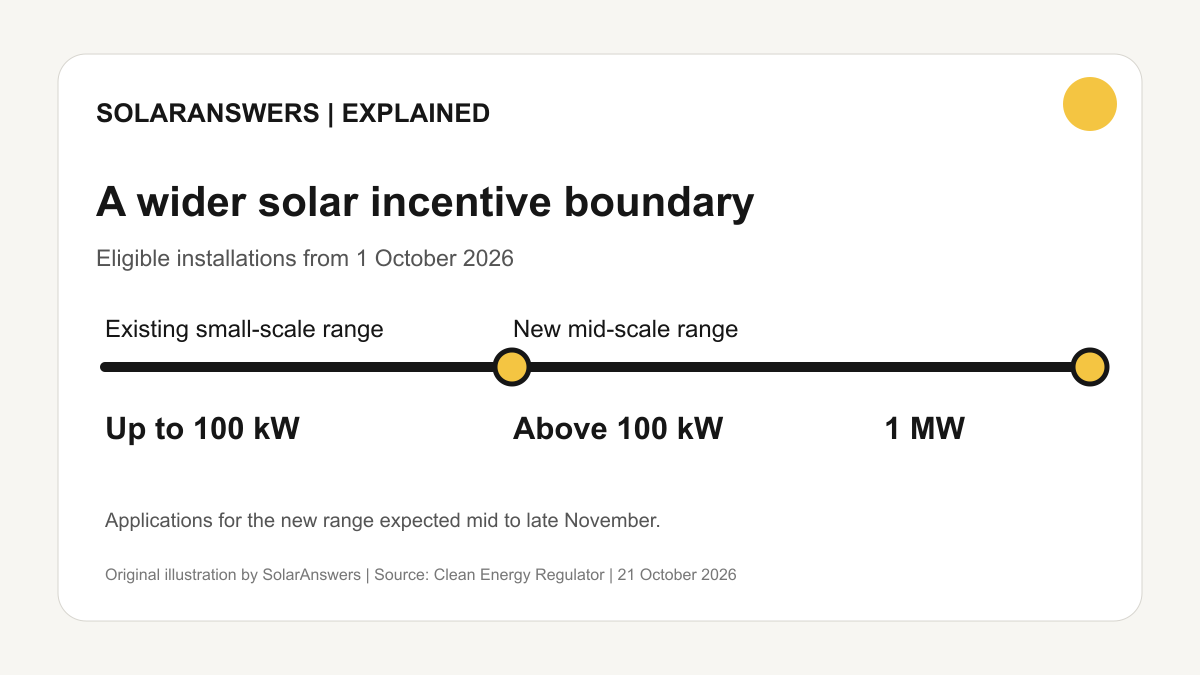
Eligible mid-scale systems installed from 1 October 2026 can seek STCs when applications open. Original SolarAnswers illustration based on CER guidance. Original graphic: SolarAnswers. Source: Clean Energy Regulator.
For years, a business planning rooftop solar had to pay close attention to the 100 kW boundary. The Australian Government's Small-scale Renewable Energy Scheme, which helps eligible owners through small-scale technology certificates (STCs), was designed around systems no larger than that threshold. A warehouse, farm or community facility that needed a substantially larger array faced a different certificate process and a different project timetable.
That boundary has changed. The Clean Energy Regulator (CER) says the scheme now extends to eligible solar PV systems above 100 kW and up to 1 MW. The new arrangements apply to eligible systems installed from 1 October 2026. This is significant for organisations with large roofs and meaningful daytime electricity demand. It does not make every commercial project automatically eligible or instantly payable.
The start date is not the application date
The first point to get right is timing. The CER says STC applications for mid-scale systems will open in mid to late November 2026, and assessment will start after the application process opens. An eligible system installed from 1 October may be able to apply once the process is available. A quote prepared now should separate the installation date, commissioning, network connection, application opening and any eventual certificate value. They are different milestones.
The CER's announcement confirming the regulations gives the policy background. Its current mid-scale guidance is the practical reference because it sets out the application window and flags further detail to come. The regulator says it will publish guidance on the boundaries between related solar devices and power stations, existing systems, extensions, upgrades and application timeframes. A project with multiple meters, staged construction or unusual ownership should resolve its specific position rather than assume a standard rooftop example fits.
What has actually changed?
An STC is a certificate associated with eligible renewable generation under the Small-scale Renewable Energy Scheme. Many residential customers encounter the certificate value as an upfront reduction in a solar quote, although the calculation and paperwork sit behind the invoice. Our explanation of solar STCs explains the household process. The new rules bring a larger class of PV projects into the framework, but a commercial proposal still needs its own certificate calculation.
The CER says eligible mid-scale systems receive a fixed five-year deeming period. That differs from the declining deeming period for systems up to 100 kW as the existing scheme approaches its scheduled 2030 end. Five years refers to deemed generation used for certificate purposes. It is not an equipment warranty or a promise that the project will pay for itself within five years. Actual financial value depends on design, certificate calculation, market value and contract terms. Ask who owns the certificates and who bears the risk if the application is changed or rejected.
There is a second pathway. The CER says a participant installing solar in the mid-scale range may choose the upfront STC route or participate in the Renewable Electricity Guarantee of Origin (REGO) scheme. The choice has consequences: its mid-scale guidance says a project claiming STCs cannot create REGO certificates for the same deeming period. The largest apparent upfront discount may not be the best commercial choice for an owner that expects to use REGO certificates later. Work out who will claim the certificates and how electricity and environmental attributes will be sold or reported before signing.
Which projects should investigate?
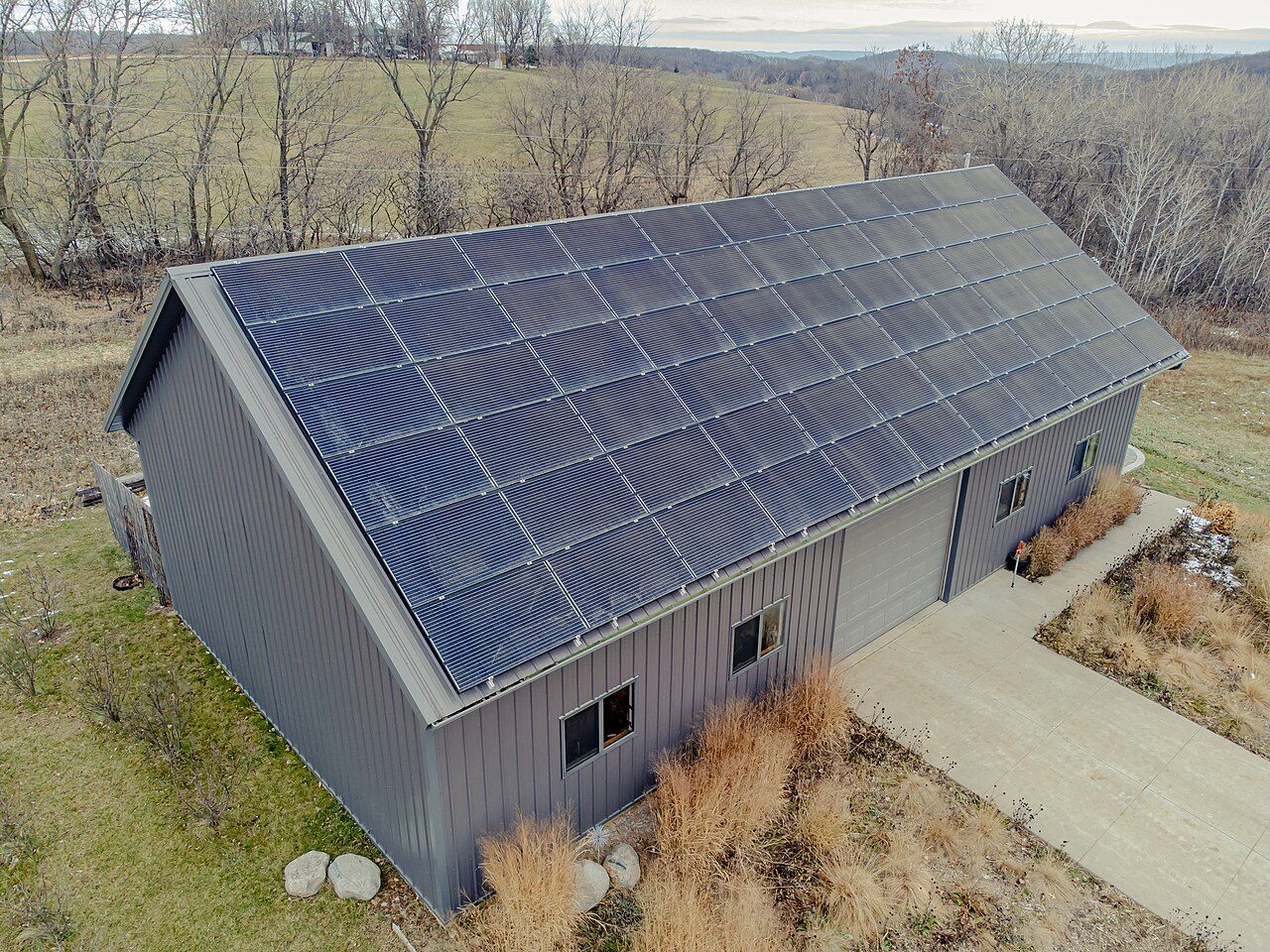
The policy is relevant to premises larger than a typical home system, such as a farm shed, supermarket, industrial building, school or community facility where roof area and daytime load justify a system above 100 kW. These are examples, not a list of automatically approved sites. A business should start with interval electricity data, roof condition, structural assessment, network connection conditions and a realistic picture of how much generation it can use on site. A large array facing an export constraint may have different economics from one serving steady daytime demand.
The CER says the new systems remain subject to scheme eligibility requirements. It points to the Clean Energy Council approved-components lists and Solar Accreditation Australia installation requirements. The designer and installer should document these checks before an owner signs, alongside electrical safety, network and any planning requirements. They should appear as named responsibilities in the contract rather than a vague assurance that the project is “rebate ready”.
For an owner comparing proposals, the core questions are practical. What are the proposed DC panel and inverter capacities? Has the network approved the export arrangement, or is the quote conditional? Does the generation model use the business's actual load profile and roof shading? Which certificate route is proposed, who will apply, and how is the quoted benefit treated if a condition is missed? Who supplies monitoring access, commissioning records and fault support after handover? Our solar quote comparison guide is a starting point, though a mid-scale project also merits commercial and technical review.
What this does not mean for households
Most homes will stay well below 100 kW. The change does not increase an ordinary householder's certificate entitlement or turn a household rebate into a 1 MW offer. It also does not establish a fixed dollar discount per kilowatt. The CER's rooftop-solar guidance remains the starting point for a conventional residential system. A home battery is a separate decision with its own Cheaper Home Batteries Program rules. The battery STC factor is scheduled to fall again on 1 January 2027, a separate year-end issue for household buyers.
The opportunity is for businesses and community-scale owners that need a system over 100 kW but found the previous certificate boundary awkward. The immediate caution is that eligibility, application timing and the STC versus REGO decision must be resolved before certificate value is treated as cash in a budget. A careful proposal shows the project economics both with and without the expected certificate benefit, then updates the figures when applications open and the CER publishes its remaining guidance.
Written by the SolarAnswers editors
We link the reporting, government, industry or manufacturer sources behind each story below, and distinguish reported claims from our own analysis. We do not sell equipment, and no installer or brand pays to be written about. How we are paid
Sources
- Clean Energy Regulator, Mid-scale solar
Checked 21 October 2026
- Clean Energy Regulator, Mid-scale solar is now legislated
Checked 21 October 2026
- Clean Energy Regulator, Renewable Electricity Guarantee of Origin
Checked 21 October 2026
- Clean Energy Council, approved products
Checked 21 October 2026
- Solar Accreditation Australia, installation requirements
Checked 21 October 2026
Comments
If comments do not appear, reload this page or browse the community.